
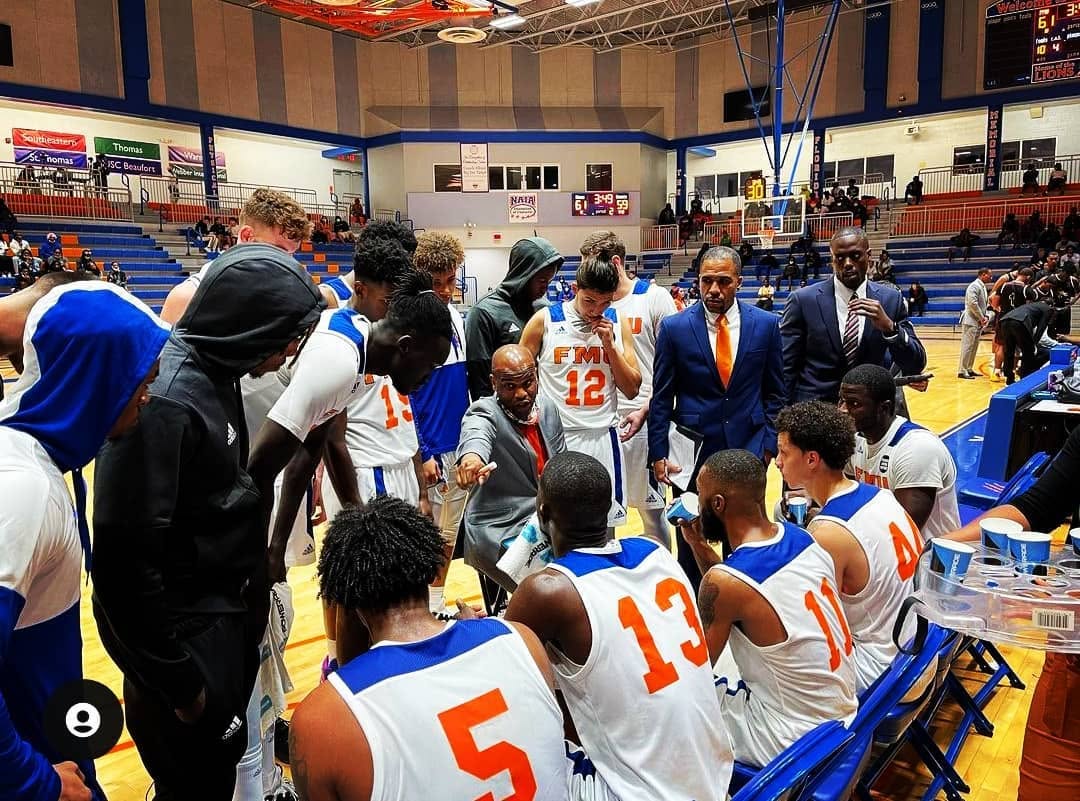
What are we preparing student-athletes to become when the ball stops bouncing?
It’s a question most young athletes don’t want to consider.
I certainly didn’t.
As a kid, I wasn’t imagining myself selling insurance, working in corporate America, building a business or sitting behind a desk.
I was imagining Madison Square Garden.
Like millions of young athletes, I dreamed about what could happen if I became good enough.
The dream gets bigger as we get better.
The NBA becomes contracts, endorsements, and the opportunity to make a living playing the game we love.
And there’s absolutely nothing wrong with that dream.
I want young athletes to have it.
Dream ridiculously big.
Train for it.
Sacrifice for it.
See how far the game can take you.
But somewhere along the journey, young athletes can absorb a dangerous idea:
Plan A is becoming a professional athlete. Plan B means you didn’t believe strongly enough in Plan A.
That’s where I disagree.
Because the numbers don’t tell young athletes to stop dreaming.
They tell us to prepare while we dream.
The Numbers Tell Us Something
Nearly 8 million students currently participate in high school athletics in the United States, while approximately 560,000 compete at NCAA schools.
In men’s basketball, the NCAA estimates that approximately 3.6% of high school participants advance to NCAA competition. At the Division I level, that figure is approximately 1.1%.
Those numbers don’t mean a young athlete shouldn’t dream about becoming a professional.
Quite the opposite.
Dreams have fueled some of the greatest accomplishments in sports.
But preparation should account for more than one possible destination.
That’s particularly important because young athletes themselves understandably remain optimistic about where sports might take them. NCAA research released in 2026 found that 78% of Division I men’s basketball respondents believed becoming a professional or Olympic athlete was at least somewhat likely.
There’s nothing wrong with that belief.
The dream isn’t the problem.
Preparing for only one possible outcome is.
Because eventually, for every athlete, the question becomes:
What have I been preparing to do next?
Why “Student-Athlete” Always Felt Incomplete to Me
I remember attending basketball clinics and camps as a kid.
After spending the morning rebounding, ball handling and shooting, a gym full of tired young players might sit around half court while coaches talked to us about life.
The message was familiar:
You have to study.
You have to get good grades.
You need something to fall back on.
I heard them.
The message registered.
But I’m not sure it resonated.
I was thinking about basketball. I was thinking about Isiah Thomas. I was thinking about the Knicks and Dr. J.
My mother was a stickler for education, and coaches reinforced what she was already teaching me. Academics stayed in my consciousness.
But eventually something about the phrase student-athlete began to feel incomplete.
Student.
Athlete.
Then what?
Adults eventually have to earn money. We build careers, support families, pay bills and create lives.
I began seeing another stage:
Student → Athlete → Professional.
Not necessarily professional athlete.
Professional.
The Summer That Changed My Understanding of “Professional”
My academic and basketball success helped me attend Archbishop Molloy High School in New York.
Getting there required roughly 90 minutes of public transportation each way.
During my sophomore year, however, my mother unexpectedly told me to stay home from school.
Then she told me again the next day.
Eventually I understood the problem.
Tuition.
My family couldn’t afford for me to continue attending.
After I had missed several weeks, my varsity basketball coach called me into his office and provided the money necessary for me to pay the bursar and return to class.
But we needed a solution for the following year.
That summer, I went to work.
A friend of my coach, Dick Gilbert, was president of a women’s fashion company in Manhattan called Zena Jeans. The arrangement was simple: I would work there for approximately 10 weeks that summer and save my paychecks toward the following year’s tuition.
At first, I wasn’t thrilled.
My friends were going to basketball camps, playing in parks, sleeping late and enjoying summer.
I was commuting into Manhattan.
But something unexpected happened.
I started learning another game.
I answered phones.
Entered orders.
Filed paperwork.
Observed buyers and sellers negotiating.
Watched sales representatives present clothing lines.
I learned about product development, branding, supply chains, professional etiquette and workplace expectations.
And I enjoyed it.
When I returned to school, I didn’t feel as though I had sacrificed my basketball future.
I felt like I had gained something.
For the first time, I could envision myself succeeding as a basketball player or a businessman.
That summer planted a seed.
What If It Hadn’t Been an Accident?
Years later, I began asking myself:
What if that professional exposure hadn’t happened because my family couldn’t afford tuition?
What if it had been intentional?
What if, beginning around sixth grade, I had spent even a small amount of time each year exploring careers?
Volunteering.
Job shadowing.
Visiting workplaces.
Talking with professionals.
Learning a skill.
Working a summer job.
I didn’t need to know in sixth grade exactly what career I would eventually pursue.
I needed to begin discovering what was possible.
When the Numbers Became Personal
I entered my senior year of college with high expectations for my team and myself.
I had earned conference honors and was ultimately a finalist for the 1996 Frances Pomeroy Naismith Award, which recognized the nation’s outstanding senior men’s college basketball player under six feet tall.
I believed I could play professionally.
If our team performed well and I earned an invitation to an NBA pre-draft camp, I believed I could potentially find my way onto an NBA roster.
And if the NBA didn’t happen?
Surely there was a professional basketball contract waiting for me somewhere.
Then something happened that I hadn’t anticipated.
My education began challenging my basketball dream.
For my senior sociology research thesis, I examined the relationship between athletic participation and academic performance.
I was interested in whether young men and students from marginalized backgrounds might place too many eggs in the professional-sports basket at the expense of preparing academically and professionally for other careers.
At the time, there was no WNBA. I wondered whether girls, without the same visible professional basketball destination, might envision their futures differently.
I surveyed approximately 100 students and student-athletes at a local high school.
Within my sample, girls tended to have higher GPAs and appeared more inclined toward seeing jobs and careers as part of their futures.
It was a student research project with a relatively small local sample—not a national study.
But it affected me.
I had started researching other student-athletes.
I finished researching myself.
Combined with what I was learning about the statistical path from college basketball to the NBA, those findings became increasingly difficult for me to ignore.
I began remembering Zena Jeans.
I thought about people building businesses and careers outside sports.
And I increasingly began seeing myself becoming an entrepreneur as clearly as I could see myself becoming an NBA player.
Then Basketball Gave Me a Choice
I finished my senior season.
I wasn’t invited to an NBA pre-draft camp.
My coach didn’t help me secure an agent.
I was disappointed.
But basketball wasn’t finished with me.
While I still had several classes remaining before graduation, I was hired to play with Kalnapilis, a professional basketball team from Panevėžys, Lithuania, during its eight-game U.S. tour against American universities. The club would later compete under several names and is known today as Lietkabelis.
I played those eight games with them.
At the conclusion of the tour, Kalnapilis offered me a contract to continue playing professionally with the team in Lithuania.
I declined.
People close to me were disappointed. Some were angry.
After all those years pursuing professional basketball, there it was: an opportunity to continue playing professionally.
But I was burned out.
Basketball had dominated my life from elementary school through college.
I wanted something different.
I wanted new experiences.
I wanted more freedom.
I wanted to discover who I might become outside the world of sports.
After spending years preparing to become a professional basketball player, I was ready to become a professional.
There was just one problem.
I wasn’t completely prepared to be one.
My Basketball Résumé Was Better Than My Professional Résumé
I made one final attempt to keep basketball connected to my professional future.
The Orlando Magic were located roughly an hour from my university. I thought my playing experience could translate into scouting, coaching or player development.
So I mailed them my résumé.
They responded.
Based on my résumé, however, they believed I appeared better suited for the non-athletic side of the organization—something like community relations.
I was offended.
How could they decide I wasn’t qualified for the basketball side?
They hadn’t even interviewed me.
Today, I see that response completely differently.
They didn’t completely reject me. They redirected me.
And I failed to recognize the opportunity.
Community relations might have gotten me through the door. Relationships, experience and performance might eventually have allowed me to move toward scouting, player development or coaching.
There was no guarantee.
But I would have been inside the organization, developing relevant professional experience and relationships.
Instead, I walked away.
And that experience exposed something important.
I had spent years building a basketball résumé. I hadn’t spent those same years building a professional résumé—or a professional network.
I had coaches.
Basketball contacts.
A reputation as a player.
Academic achievement.
A sociology degree that taught me a great deal about people, groups and behavior.
But I hadn’t completed college internships.
I didn’t have professional mentors.
I hadn’t accumulated significant practical experience in a chosen career field.
Meanwhile, many students who weren’t consumed by college athletics had spent those years attending career fairs, completing internships, building professional relationships and preparing for employment.
They were preparing to become professionals.
I was preparing to play professionally.
There’s a difference.
Fortunately, One Seed Had Already Been Planted
I returned to New York.
And that summer at Zena Jeans suddenly mattered again.
Fashion was one of the few industries in which I possessed actual workplace experience.
I became involved with a startup men’s clothing line. Around the same time, a well-known hip-hop DJ I knew asked me to help with a new record label while I was seeking his help connecting the clothing brand with artists who might wear and promote it.
Suddenly I had a double hustle: fashion and music.
The environment had many of the things I loved about basketball—energy, travel, competition, big events, relationships, ambition and the possibility of financial success.
A friend who believed in my aspirations provided seed capital that helped me pursue those opportunities.
I found another path.
But finding a path after basketball isn’t the same thing as intentionally preparing one while you’re playing.
And that’s where my thinking about student-athlete development ultimately changed.
Building the Student-Athlete-Professional
Today, I call the idea the Student-Athlete-Professional—SAP.
SAP doesn’t ask student-athletes to surrender the athletic dream.
We support the dream.
Train for it.
Sacrifice for it.
Compete for it.
Pursue the scholarship, championship, draft pick or professional contract with everything you have.
But have the dream while still being awake.
Understand that while you’re developing the athlete, another person is developing too:
the professional.
If we’re willing to spend 10 or 15 years developing an athlete, why would we wait until the end of college to begin developing the professional?
We wouldn’t tell a college senior who had never seriously trained for basketball to begin practicing a few months before the NBA Draft and expect to compete with players who had been developing their games since childhood.
Yet we can do something remarkably similar with career preparation.
At the end of college:
Now build a résumé.
Now get experience.
Now create a professional network.
Now figure out what you want to do.
SAP challenges that sequence.
Develop the professional over the same years you’re developing the athlete.
Middle School: Explore
I believe that process can begin around sixth grade.
Not career selection.
Career exploration.
Middle school is a period when young people are maturing, becoming more independent and developing a greater ability to understand adults, environments, behavior and consequences.
Give professional exploration just one intentional hour per week.
Volunteer.
Shadow someone.
Observe.
Ask questions.
Meet professionals.
Explore an industry.
Develop a skill.
One hour per week is approximately 52 hours per year.
Over seven years, that’s more than 350 hours of potential exposure before college.
And exploration includes discovering what you don’t want to do.
That’s valuable too.
High School: Create Direction
As the SAP progresses through high school, career development should become increasingly intentional.
Many students already complete community-service hours.
Why not connect some of that time to career exploration?
Volunteer within an industry.
Job shadow.
Take relevant classes.
Meet professionals.
Ask what they studied.
Ask what their work actually requires.
Ask what they wish they had known at 16.
Now exploration begins turning into direction.
College: Build Experience
College is where the professional track should accelerate.
Previous exploration can help inform the student’s major or course of study.
Now connect:
Academic preparation + professional experience + professional relationships.
Internships.
Mentors.
Professors.
Career fairs.
Professional organizations.
Networking.
Summer employment.
Practical experience.
The student-athlete is no longer simply saying:
I think I might want to do this.
They’re accumulating evidence that says:
This is what I’m preparing to do.
The broader idea that student-athletes need career preparation is not controversial. NCAA Division I core guarantees currently include access to career counseling and career development, and the NCAA describes these resources as helping student-athletes prepare for life after sports.
My question is:
Why wait until the end of the journey to make professional development a priority?
Two Tracks. One Destination.
I think of SAP as two parallel railroad tracks.
One is athletic development.
The other is professional development.
They move forward together.
The SAP is the conductor of both trains.
This isn’t sport or profession.
It’s sport and profession.
Not a backup plan. A dual-success plan.
And to sustain both tracks, the SAP has to learn one of the most important skills I discovered as a student-athlete:
time management.
168 Hours
Everyone receives the same 168 hours each week.
A serious student-athlete already has significant demands on those hours: class, studying, practice, competition, travel, sleep, meals, relationships and recovery.
The solution isn’t magically finding more time.
It’s becoming intentional about allocating the time that already exists.
That’s why I developed what I call the SAP Time Management Chart—SAP TMC.
The concept is simple: account for the week in advance and give the available hours purpose—including school, athletics, rest, relationships, fun and professional development.
Professional development doesn’t necessarily require another 20 hours every week.
Sometimes it starts with one.
One hour.
Scheduled intentionally.
Repeated consistently.
Allowed to compound over years.
You can’t manage time you haven’t accounted for.

Imagine Graduating With 1,000 Hours of Experience
Now imagine what could happen if that commitment grows as the student grows.
One hour per week during the earlier years creates a foundation.
Then high-school volunteering, summer employment, job shadowing and career exploration add hours.
College internships, professional experiences and increasingly serious involvement add considerably more.
What if, by graduation, an SAP had accumulated 1,000 documented hours of professional development and practical experience?
I’m not presenting 1,000 hours as a scientific threshold or employment guarantee.
I’m presenting it as a developmental target worth considering.
Imagine reaching age 21, 22 or 23 with:
A college degree.
A completed athletic career.
Internships.
Professional references.
Mentors.
Industry relationships.
Transferable skills.
A résumé.
A professional network.
Career direction.
And hundreds—perhaps 1,000 or more—documented hours showing that you haven’t merely studied a profession.
You’ve begun practicing it.
Imagine the first serious interview when an employer asks:
“You’re a recent graduate. What professional experience do you have?”
The SAP doesn’t have to answer:
“None. I was busy playing sports.”
Instead:
“Let me show you.”
Don’t graduate looking for your first professional experience.
Graduate carrying a record of it.
When the Ball Stops Bouncing
That’s what I want for student-athletes.
I don’t want them practicing less.
I don’t want them competing with less intensity.
And I certainly don’t want an 11- or 12-year-old to stop imagining the NBA, WNBA, NFL, MLB, Olympics or any other athletic destination because an adult showed them a probability table.
Have the dream.
Just have the dream while still being awake.
Use sports for everything they’re worth—the health, discipline, education, travel, relationships, teamwork, leadership, competition, scholarships, camaraderie and opportunities.
But give the professional the same opportunity to develop over time that we routinely give the athlete.
By graduation, the Student-Athlete-Professional should be carrying both résumés.
An athletic résumé that says:
Here’s what I’ve accomplished.
And a professional résumé that says:
Here’s what I’ve been preparing to become.
Maybe professional sports comes calling.
Maybe corporate America does.
Maybe entrepreneurship does.
Maybe graduate school does.
Maybe several opportunities come calling at once.
That’s the dilemma I want the Student-Athlete-Professional to face.
Not:
What am I going to do?
But:
Which opportunity am I going to choose?
Prepare for the possibility of becoming a professional athlete while preparing for the inevitability of becoming a professional.
And then there’s one final responsibility.
Remember the village that helped you get there.
The coach who opened a door.
The teacher who challenged you.
The professional who let you shadow them.
The company that gave you an internship.
The mentor who answered your call.
The person who introduced you to someone you needed to know.
Because eventually, that sixth grader becomes the professional another sixth grader needs to meet.
So once you’ve climbed the ladder:
Drop it back down.
Open the door.
Make the introduction.
Become the mentor.
Create the internship.
Give someone else an hour of your time.
Help develop the next Student-Athlete-Professional.
Each one must teach one.
Are You Developing Student-Athletes for Life Beyond the Game?
Jason Gilliam-Alexander works with student-athletes, parents, coaches, schools and organizations to help young people develop the leadership, discipline, career readiness and life skills necessary to succeed during—and beyond—their athletic careers.
Leave a Reply